
The Moment You Fall in Love with the Wrong Venue
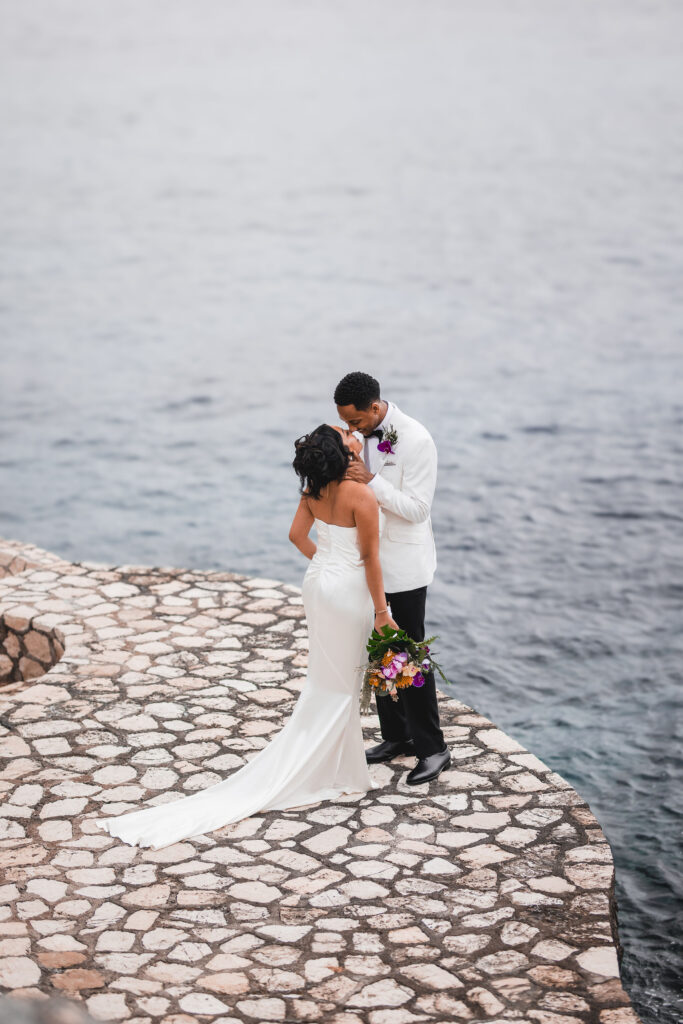
Picture this: You’re scrolling through a venue’s Instagram gallery at midnight, and there it is—golden hour light spilling across a terrace, florals that seem to float, and a couple laughing with an ocean backdrop so perfect it looks like a painting. Your heart skips. You screenshot it. You send it to your partner with a string of heart emojis. You’re already mentally placing your guests at those tables.
This feeling is real. It’s beautiful. And if you let it drive your decision alone, it could become one of the most expensive mistakes you ever make.
The truth every experienced wedding planner knows is this: a stunning venue photo tells you almost nothing about whether that venue is right for you. What it doesn’t show you is the vendor lock-in buried in paragraph nine of the contract. It doesn’t reveal the noise curfew that ends your celebration at 9 PM. It doesn’t mention the off-property guest fees that silently inflate your budget by thousands.
This guide exists to protect that moment of falling in love—not kill it. Because when you understand exactly what to look for, ask, and verify before you sign anything, you can walk into your venue with total confidence instead of quiet dread. You stop being a hopeful couple and become an empowered one.
At Weddings in Paradise, we’ve walked alongside couples through every version of this process—the smooth ones and the complicated ones. What we’ve learned is that the couples who have the best experiences aren’t necessarily the ones who found the most beautiful venues. They’re the ones who asked the right questions before committing.
Let’s make sure you’re one of them.
SECTION ONE: The Aesthetics Trap – Why the View Is Just the Beginning
There is nothing wrong with being moved by beauty. In fact, feeling emotionally connected to a space is genuinely important—you want to love where you’re getting married. The trap isn’t the feeling. The trap is stopping there.
Think about what a venue’s photos are designed to do: they’re marketing assets, curated to evoke exactly that midnight-scrolling reaction. Every image shows the venue at its best—perfect light, perfect setup, perfect everything. What photography cannot capture is how a venue operates—its policies, its flexibility, its relationship with couples and vendors, and the fine print waiting in its contract.
The couples who end up frustrated aren’t the ones who chose ugly venues. They’re the ones who chose gorgeous venues without asking whether those venues would actually support their vision end-to-end. They discovered restrictions after they’d already committed emotionally and financially.
The antidote is simple: let the photos open the door, then do the real work before you walk through it. Every section of this guide gives you the tools to do exactly that.
SECTION TWO: Understanding the Fine Print – Your Contract Is the Real Conversation
A venue contract is where the relationship between you and a venue becomes official. It’s also where assumptions go to die.
Most couples don’t read venue contracts closely—not because they’re careless, but because contract language is dense, often deliberately vague, and easy to defer to when you’re excited. This is one of the most common and costly oversights in the entire wedding planning process.
What to Look For Before You Sign
Cancellation and Force Majeure Clauses: What happens if you need to cancel or postpone? What are the refund terms at various stages? Is there language around events outside your control—weather, illness, and travel disruptions? These clauses matter enormously, especially for destination weddings.
Payment Schedules and Deposit Terms: When are payments due? Are deposits refundable? What triggers a forfeiture of funds? Make sure you understand exactly when money moves and under what circumstances it doesn’t come back.
Liability Language: Who is responsible if something goes wrong on-site? What are you indemnifying the venue against? Does the venue have backup plans if disaster strikes, and if so, what kind of plan?
Time Windows: Many contracts specify when your event must end, when vendors can arrive for setup, and when everything must be cleared. These window constraints can significantly affect your experience.
Exclusivity and Competing Events: Will another wedding be happening at the same venue on your day? Are there shared spaces? What are the rules around overlap?
⚠️ Red Flag Alert: If a venue representative says, “Don’t worry about that clause; it never comes up”—that’s not reassurance. That’s a reason to read it even more carefully. Professionals who operate in good faith welcome your questions; they don’t minimize them.
Contract review is one of the most valuable services a professional wedding planner provides. They’ve read hundreds of these documents. They know what normal looks like—and they know what should raise concern. Not sure how to interpret a clause in a venue contract? The Weddings in Paradise planning team reviews every contract detail with our couples before anything is signed. Reach out here to learn how we can help.
SECTION THREE: The Vendor Question – Flexibility vs. Control
Few issues create more conflict between couples and venues than vendors. Specifically, who can you bring, and what does it cost you to do so?
Here’s the distinction that matters most:
Preferred Vendor Lists are collaborative tools. A venue has built relationships with vendors they trust, have tested, and enjoy working with—and they share that list with you as a resource. You’re not required to use them, but you should be able to benefit from their curated vendor list. This is a healthy, couple-friendly approach. But sometimes you don’t; it often costs you more in undisclosed commission fees.
Exclusive vendor lists are restrictive. The venue dictates which vendors you must use, often because those vendors pay referral fees or have financial arrangements with the venue. Your creative freedom narrows considerably. Want a photographer whose work you’ve followed for years? If they’re not on the exclusive list, you may be out of luck—or facing significant added fees to bring them in.
Critical Vendor Questions to Ask Every Venue
- Do you have an exclusive vendor list or a preferred vendor list?
- Can I bring vendors who are not on your list?
- If so, do you charge a vendor fee for outside vendors?
- Are there any vendor categories where I have no flexibility at all?
- Do outside caterers face additional restrictions or fees?
Pro Insight: Vendor fees for outside vendors can range from a modest administrative charge to a significant percentage of that vendor’s rate. Always ask for the full fee structure in writing—not just a verbal estimate.
An experienced destination wedding planner brings something invaluable here: established vendor relationships at the venues they work with regularly. They often know which venues are genuinely flexible and which ones use “preferred vendor” language to describe what is functionally a required list. That knowledge alone can prevent you from booking a venue that quietly limits your entire creative team.
SECTION FOUR: Hidden Fees – The Budget Leak Nobody Warns You About
One of the most common moments of shock in the wedding planning process sounds like this: “Wait—that’s not included in the venue fee?”
Venue pricing is rarely as simple as a single line item. The base fee often represents just the beginning of what you’ll actually pay. Understanding the full fee architecture before you book is not optional—it’s essential.
Commonly Overlooked Venue Charges
Vendor Fees: As mentioned above, many venues charge fees for any vendor not on their approved list. These can appear as flat fees per vendor or as a percentage of the vendor’s total cost to you.
Off-Property Guest Fees: This is one of the most surprising charges couples encounter, particularly at resort-style or destination venues. If your guests are not staying at the property, the venue may charge a per-head fee for each off-property guest attending your event. This can add up dramatically if a significant portion of your guest list is staying elsewhere. Whether or not the venue can accommodate them or not.
Setup and Breakdown Fees: Some venues charge separately for the hours vendors spend setting up before your event and breaking down after. These can extend beyond your event window and appear as overtime charges.
Corkage and Service Fees: Bringing your own wine or spirits? Many venues charge a corkage fee per bottle. Service charges on food and beverages can also be layered—18%, 20%, or more—on top of quoted per-person rates.
Cake Cutting Fees: If you’re bringing in an outside cake, some venues charge a fee per slice just to cut and plate it.
Generator and Infrastructure Fees: For outdoor ceremonies or reception spaces without full utility access, supplemental costs for power, lighting, or tenting may not be included in your base fee.
Gratuity Expectations: Is gratuity included in the service charge, or is it separate and expected on top? Get clarity on this early.
⚠️ The Real Number Exercise: Before comparing venues side-by-side, do a full fee audit for each one. Add every known additional charge to the base fee and compare that total. A venue that appears less expensive at first glance often closes that gap—or reverses it—once all fees are accounted for.
Navigating venue fee structures is exactly the kind of work our team does before you ever commit. Connect with Weddings in Paradise to get a true apples-to-apples venue comparison for your destination.
SECTION FIVE: Guest Accessibility – Is This Venue Actually Welcoming to Your People?
Your venue choice isn’t just about you—it’s about everyone you love showing up and having a meaningful experience. A venue that creates friction for your guests creates friction for your day.
Accessibility and Logistics Questions That Matter
Physical Accessibility: Does the venue accommodate guests with mobility limitations? Are there steps, uneven terrain, or areas that would be difficult to navigate? For destination weddings especially, older guests or those with physical limitations deserve a space that includes rather than excludes them.
Travel and Accommodation Logistics: How far is the venue from where your guests will be staying? Is transportation readily available, or will guests need to arrange private transfers? Are there nearby accommodation options at a range of price points?
Off-Property Guest Policy: Return to this question in the context of guest experience. If your venue charges guests fees for attending from outside the property, does that create any practical friction? Do guests need to check in somewhere, carry a wristband, or navigate an arrival process?
Guest Comfort: What are the restroom facilities like, particularly for outdoor venues? Is there adequate shade, shelter, or climate control for the time of year you’re planning? What contingencies exist for weather? When Hurricane Melissa threatened Jamaica, we asked a venue that we were scheduled to do a wedding at about contingency plans. They told us they didn’t have one and gave us attitude because we dared to ask the question.
Parking and Arrival: Is parking available and included, or is there a fee? What does the arrival experience look like for guests who aren’t familiar with the property?
Think About This: Imagine your grandmother navigating the venue, a guest with young children, or someone who flew in from across the world and doesn’t know the area. Does this venue work for each of them? If the answer is no, that’s a real consideration—not a minor one.
SECTION SIX: Planner Compatibility – What a Venue’s Stance on Independent Planners Reveals
Here’s something couples don’t always know to ask: Does this venue welcome independent wedding planners?
This question matters more than it might seem. A venue’s answer—and their attitude while giving it—tells you something significant about how they view the couple’s interests versus their own operational preferences.
Venues that genuinely partner with independent planners understand that a well-prepared planning team makes events run better for everyone. They’ve seen the difference a skilled planner makes. They welcome the collaboration because the outcome—a beautifully executed wedding—reflects well on them too.
Venues that resist or discourage independent planners often do so because they prefer to upsell their own in-house coordination services or because they want fewer advocates in the room challenging their defaults. An independent planner’s job is to represent you—and some venues find that inconvenient.
We encountered this issue recently with a venue in Negril, Jamaica. We were hired after the venue booked because the couple was having communication issues with the onsite coordinator, and the venue basically disregarded our lead planner and wasn’t accommodating. They weren’t happy because our planner got the couples’ budget lower by knocking off some of the items the venue pushed on them. We ended up in a few back-and-forth confrontations until we were finally able to come to some level of agreement. If you would like to read more about onsite coordinators vs. independent coordinators, check out our blog page.
Questions to Ask About Planner Compatibility
- Do you work with independent, outside wedding planners?
- Is there a fee associated with bringing an outside planner?
- What is your venue coordinator’s role, and how does it differ from an independent planner’s role?
- Can our planner be present during setup and throughout the event?
- How do you typically communicate with outside planning teams during the lead-up to the event?
Important Distinction: A venue coordinator works for the venue. An independent planner works for you. These are not interchangeable roles. A venue coordinator’s priority is the smooth operation of the venue’s event schedule. Your planner’s priority is your vision, your experience, and your peace of mind—from vendor negotiations through the final dance.
At Weddings in Paradise, our relationships with destination venues are built on mutual respect and a proven track record of seamless events. Venues that have worked with us know what to expect—and that makes every conversation on your behalf more productive. Learn more about how we work with venues on behalf of our couples.
SECTION SEVEN: Restriction Reality Check – Uncovering What’s Not in the Brochure
Every venue has rules. The question is whether those rules are compatible with your vision, and the only way to find out is to ask directly before you’re bound by a signed contract.
The Restriction Categories You Must Explore
Noise and Music Restrictions: What is the venue’s noise curfew? Are there decibel limits? Do restrictions differ between indoor and outdoor spaces? A reception that must go silent at 9 PM may not align with the celebration you’re envisioning.
Décor and Design Restrictions: Are there restrictions on open flames, candles, confetti, sparklers, floral installations, or structural décor? Some venues have strict guidelines about what can be hung, attached, or placed—and discovering these after you’ve hired a decorator is deeply frustrating. We experienced this issue with the same venue in Negril, Jamaica, when they recommended their preferred decor person, who refused to set up floral arrangements that were purchased from another vendor. My team and I had to set them up. We had to take on additional roles in order to have the event run smoothly.
Time Restrictions: Beyond noise curfews, are there time limits on vendor setup and breakdown? Are there additional charges for extending your event? What happens if your timeline runs long?
Aesthetic Requirements: Some venues have specific rules about color schemes, tenting, or signage that are designed to protect their brand identity. These restrictions can be significant if you have a highly specific or unconventional vision.
Photography and Drone Restrictions: In destination settings, there may be regulations—local, governmental, or venue-specific—around drone usage, tripod setups, or photography in certain areas. These can affect your photographer’s ability to capture the images you’re dreaming of.
Alcohol and Service Restrictions: Are there restrictions on the type of alcohol served? When service must end? Who is licensed to serve on-property?
The Honest Framing: These questions don’t make you a difficult client—they make you a prepared one. Any venue that treats thorough questions as inconvenient is showing you exactly how they’ll handle you once you’re locked in.
SECTION EIGHT: Your Complete Vetting Framework – The Questions That Protect Your Vision
Before you commit to any venue, you should be able to answer every question below confidently. If you can’t, the answer is simply, keep asking until you can.
THE WEDDING VENUE VETTING CHECKLIST
CONTRACT & LEGAL
- ☐ Do I fully understand the fine print in this venue’s contract?
- ☐ What are the cancellation and postponement terms?
- ☐ What does the payment schedule look like, and when are deposits non-refundable?
- ☐ What liability language exists, and what insurance am I required to carry?
- ☐ Are there exclusivity clauses or competing event policies?
VISION & FLEXIBILITY
- ☐ Is this venue genuinely ideal for my wedding vision—not just beautiful in photos?
- ☐ How flexible is the venue when couples have specific or non-traditional requests?
- ☐ What decor, aesthetic, or design restrictions apply?
- ☐ Are there noise, music, or time curfews that would affect my celebration?
- ☐ Are there photography, drone, or media restrictions?
VENDORS
- ☐ Does the venue use a preferred vendor list or an exclusive vendor list?
- ☐ Can I bring my own vendors freely, or are there restrictions?
- ☐ Are there vendor fees for outside vendors, and what are they exactly?
- ☐ What is the process for getting a non-listed vendor approved?
FEES & BUDGET
- ☐ Does the venue charge fees for off-property guests?
- ☐ Are there setup, breakdown, or overtime charges?
- ☐ What are the corkage, cake cutting, or service fee policies?
- ☐ What does the total cost actually look like when all fees are included?
GUESTS & ACCESSIBILITY
- ☐ Is the venue accessible for guests with mobility limitations?
- ☐ How does the venue accommodate guests staying off-property?
- ☐ What are the transportation, parking, and arrival logistics for guests?
PLANNING PARTNERSHIP
- ☐ Will the venue work with an independent planner if I hire one?
- ☐ Is there a fee for bringing an outside planning team?
- ☐ What is the venue coordinator’s role, and how does it differ from my planner’s?
- ☐ How does the venue communicate with outside planners in the lead-up to the event?
SECTION NINE: Why a Professional Planner Changes Everything
You now have the questions. You have the framework. And you might be thinking, I can do this on my own.
You can, and this guide will absolutely make you better at it. But there’s a meaningful difference between knowing what questions to ask and knowing what the answers actually mean.
An experienced destination wedding planner—particularly one with deep venue relationships in your chosen location—brings something no checklist can replicate: context.
They know which venues are consistently flexible and which ones are rigid on paper but negotiate well. They’ve seen which contract clauses have real teeth and which ones are rarely enforced. They know which venue coordinators are collaborative partners and which ones are obstacles in professional clothing. They know what fees are standard and which ones should prompt a negotiation.
Beyond knowledge, a seasoned planner brings leverage. Venues that have a long-standing relationship with a planning team are more likely to accommodate special requests, waive certain fees, and prioritize your event’s needs—because they value the relationship and the ongoing referrals that come with it.
At Weddings in Paradise, our comprehensive planning process is built around exactly this dynamic. We don’t just help you find a venue—we help you understand it, negotiate with it, and build a wedding day around it that reflects your vision without compromise. We review every contract clause alongside you. We know the fee structures. We have the vendor relationships. And we’ve built the kind of trust with destination venues that makes your planning experience smoother from the first conversation to the final dance.
You deserve to walk into your venue on your wedding day without a single unresolved question. That’s what we make possible.
YOUR NEXT STEPS
Implementation Action Plan
Step 1 – Save and Use the Checklist: Print or save the vetting checklist above. Bring it to every venue tour. Do not walk out of a site visit without answers to every question on it.
Step 2 – Read Before You Sign: Never sign a venue contract without reading it fully. If the language is dense or unclear, pause. Ask questions. Get answers in writing.
Step 3 – Build a True Budget: For every venue you’re considering, add all known fees to the base rate. Compare the real numbers, not the headline numbers.
Step 4 – Assess Vendor Freedom: Before falling in love with a venue, confirm whether your key vendors—especially your photographer—can work there without restriction or significant added cost.
Step 5 – Think About Your Guests: Walk the venue with your guest list in mind. Is everyone truly accommodated? Is travel logistics manageable? Does the experience work for people at different ability levels?
Step 6 – Consider a Professional Planner: If any part of this guide made you realize how much there is to navigate, that’s exactly the point. A seasoned planner doesn’t just reduce stress—they protect your investment and amplify your vision. Schedule a complimentary consultation with the Weddings in Paradise team and discover what bespoke destination planning actually feels like.